
- All
- Product Name
- Product Keyword
- Product Model
- Product Summary
- Product Description
- Multi Field Search

Views: 0 Author: Site Editor Publish Time: 2026-02-16 Origin: Site


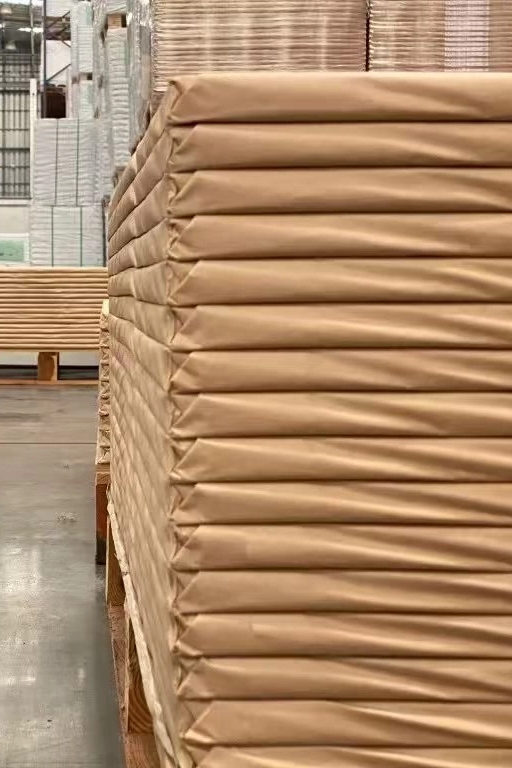
When it comes to reading a book, the experience is shaped not only by the content but also by the paper it is printed on. Paper choice directly affects print quality, page-turning feel, binding performance, overall cost, book weight, and long-term durability. Different types of books place very different demands on paper—some prioritize color reproduction, others focus on reading comfort, while many must balance cost and practicality. From a real-world publishing and printing perspective, this article introduces the three most commonly used paper types for books and explains where each one works best, helping you make a more informed choice.
Offset paper is the most widely used paper in book printing today, especially for textbooks, literary works, and reference books.
In terms of performance, offset paper has low dimensional change and good stability, which means it is less likely to curl or wrinkle during printing and binding. Ink absorption is even and well controlled, preventing ink bleeding while keeping text edges sharp and clear. Its moderate surface smoothness supports clean printing without excessive glare, making it comfortable for reading.
Visually, offset paper usually offers high whiteness and good opacity. Even at lower basis weights, it effectively reduces show-through, making it suitable for double-sided printing with large volumes of text. Its basic water resistance also contributes to better durability after binding.
In practice, offset paper is ideal for books primarily printed in one or two colors, such as textbooks, study guides, novels, essays, and academic publications. It can also handle four-color printing where color accuracy is not the main focus, offering strong cost efficiency.
Common basis weights for offset paper include 50, 60, 70, 80, 100, and 120 g/m². Among these, 70 g/m² and 80 g/m² are the most popular choices for text pages, balancing thickness, feel, and cost. Weights of 100 g/m² and above are typically used for books that require higher durability or a more premium feel.
Coated Paper
When images, color, and visual presentation are the core of a book, coated paper is usually the preferred option.
The defining feature of coated paper is its highly smooth surface and high brightness. Thanks to its coated layer, ink stays mostly on the surface, resulting in vivid colors, strong saturation, and excellent detail reproduction. Both large color areas and fine image details can be rendered clearly and consistently.
Based on surface finish, coated paper is generally divided into gloss coated paper and matte coated paper. Gloss coated paper has higher reflectivity and stronger visual impact, making it suitable for commercial catalogs and promotional books. Matte coated paper has lower glare and a softer appearance, which is better for art books or photography books intended for extended reading.
In real-world applications, coated paper is widely used for art books, photography collections, children’s picture books, and high-end full-color publications. These products are highly visual, so printing performance is a top priority.
Coated paper is available in a wide range of basis weights, commonly including 70, 80, 105, 128, 157, and 200 g/m². Text pages often use 105 g/m² or 128 g/m², while covers and inserts typically use higher weights to improve stiffness and perceived quality.
Lightweight Paper
As reading comfort and environmental awareness gain importance, lightweight paper has become increasingly popular among publishers and readers in recent years.
One key characteristic of lightweight paper is that it contains no fluorescent whitening agents. Its natural off-white or light cream color creates a softer visual experience that reduces eye strain during long reading sessions, making it especially suitable for text-heavy books.
From a physical standpoint, lightweight paper offers good bulk, meaning it feels thicker at the same basis weight while keeping overall book weight low. This makes finished books easier to carry, particularly those with a high page count. Lightweight paper also performs well in terms of environmental friendliness and long-term stability, making it suitable for books that are frequently handled.
In terms of use cases, lightweight paper is commonly chosen for general reading materials, poetry collections, popular science books, and reference titles where reading comfort matters more than visual impact. For content-driven books, it provides a practical balance between user experience and functionality.
Typical basis weights for lightweight paper range from 60 to 100 g/m², with 70 g/m² and 80 g/m² being the most common. These weights maintain sufficient strength while effectively controlling the overall weight of the book.
Conclusion
There is no single standard answer to the question of what paper should be used for books. The right choice depends on the book’s content, reading habits, printing requirements, and budget. Offset paper is valued for its balance and versatility, making it suitable for most text-based books. Coated paper excels in color reproduction and visual quality, ideal for premium full-color publications. Lightweight paper focuses on reading comfort and sustainability. By fully understanding the characteristics of each paper type, you can select the most appropriate paper and ensure that the content and the medium truly complement each other. Contact Double Tree Paper for paper solutions now!
