
- All
- Product Name
- Product Keyword
- Product Model
- Product Summary
- Product Description
- Multi Field Search

Views: 69 Author: Site Editor Publish Time: 2026-07-20 Origin: Site


Introduction: The Allure of Metallic Packaging
What Is Metallized Paper?
How Is It Made? The Vacuum Metallization Process
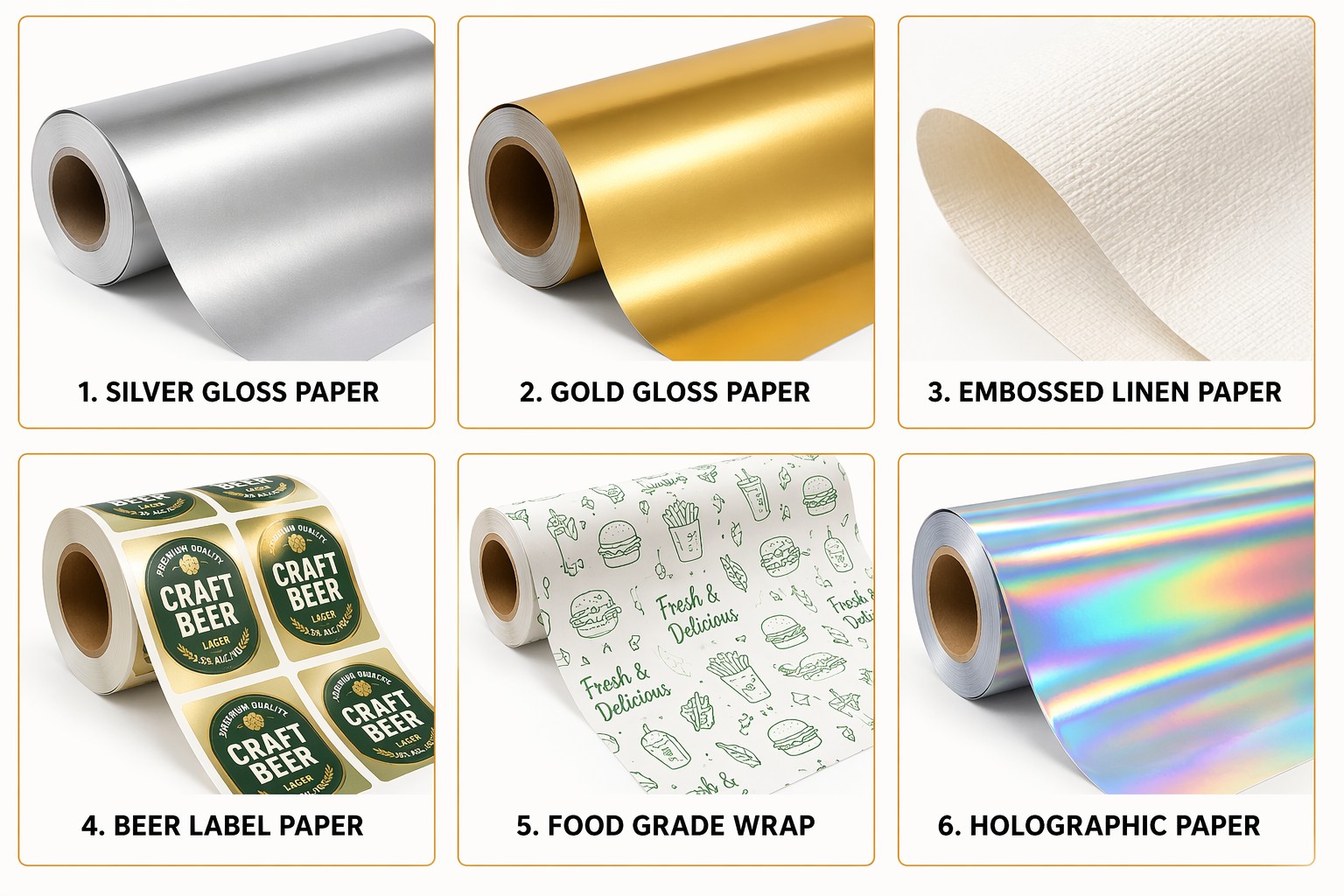
Types of Metallized Paper Finishes
Metallized Paper vs. Aluminum Foil & Film
Key Applications in Modern Industries
Why Choose Double Tree Paper Group?
FAQ
In the competitive world of retail, shelf appeal is everything. Whether it’s a box of premium chocolates, a bottle of craft beer, or a luxury cosmetic carton, a metallic finish instantly signals quality and value to the consumer.
Metallized paper (often called metallic paper) has become the industry standard for achieving this high-end look without the high cost and environmental impact of solid metal. At Double Tree Paper Group, we help brands leverage this versatile material to create packaging that stands out while meeting modern sustainability goals.
Metallized paper is a specialized material created by depositing a thin layer of aluminum onto a paper substrate. Unlike laminated foil, which glues a thick sheet of metal to paper, metallized paper uses a microscopic layer of aluminum (less than 0.1μm).
This process gives the paper a brilliant, mirror-like surface while retaining the lightweight, flexible, and printable characteristics of paper.
Key Features:
Premium Visuals: High gloss and reflectivity enhance brand perception.
Barrier Properties: Provides moderate protection against moisture, oxygen, and light, helping to preserve product freshness.
Sustainability: It is recyclable and biodegradable, unlike plastic-based metallized films.
Cost-Effective: Lighter than foil and cheaper to produce, reducing shipping and material costs.
The magic happens in a vacuum chamber. The most common method is Vacuum Metallization:
Preparation: High-quality paper (often coated with a primer) is loaded into a vacuum chamber.
Evaporation: Aluminum wire is heated electrically until it evaporates in the vacuum environment.
Deposition: The aluminum vapor condenses onto the cooler surface of the paper, forming a uniform, microscopic metallic layer.
Finishing: The paper may receive a top coat to protect the metal layer and improve printability.
Note: This process allows for precise control over the thickness of the aluminum layer, balancing reflectivity with flexibility.
Not all metallic paper looks the same. We offer various finishes to suit different branding needs:
Finish Type | Visual Effect | Best For |
|---|---|---|
Gloss Metallized | Mirror-like, high reflectivity | Cigarette packs, candy wrappers, premium labels |
Matte Metallized | Satin finish, elegant, low glare | Luxury cosmetic boxes, book covers, high-end wine labels |
Holographic | 3D rainbow patterns, anti-counterfeit | Security labels, limited edition packaging, gift cards |
Patterned | Selective metallization (e.g., stripes or logos) | Creative packaging designs requiring partial metallic effects |
It is crucial to choose the right material for your application. Here is how metallized paper compares to its counterparts:
Vs. Aluminum Foil: Foil is a solid metal sheet. It offers a total barrier but is stiff, expensive, and difficult to recycle when laminated. Metallized paper is flexible, printable, and more eco-friendly.
Vs. Metallized Film (BOPP/PET): Film is plastic-based. While it offers excellent moisture barriers, it is not biodegradable. Metallized paper is the superior choice for brands aiming for sustainable packaging and plastic reduction.
Double Tree Paper Group supplies metallized paper to a diverse range of sectors:
Food & Beverage: Chocolate wrappers, biscuit packaging, tea bags, and beer bottle labels. The barrier properties help maintain freshness and aroma.
Tobacco: The inner lining of cigarette packs (cigarette paper) is a massive consumer of high-gloss metallized paper.
Cosmetics & Perfume: Folding cartons for skincare and fragrance often use matte or gloss metallized board to convey luxury.
Labels & Stickers: Self-adhesive metallized paper is widely used for "no-label look" bottles and durable industrial labels.
As a leading paper supplier, we understand that consistency is key in metallization. A variation in the aluminum layer can ruin a print run.
Our Advantages:
Uniform Coating: We utilize advanced vacuum metallization technology to ensure the aluminum layer is consistent across the entire reel, preventing "cloudy" spots.
Superior Printability: Our paper is treated to accept UV inks, offset inks, and water-based coatings effectively, ensuring your graphics pop.
Eco-Friendly Options: We offer recyclable grades that meet international environmental standards, helping you reduce your carbon footprint.
Global Supply Chain: With a monthly export volume of 200-300 containers, we ensure timely delivery to over 200 countries.
Q1: Is metallized paper recyclable?
A: Yes. Unlike plastic laminates, the microscopic aluminum layer in vacuum metallized paper does not interfere with the standard paper pulping process. It can be recycled with normal paper waste.
Q2: Can I print on metallized paper?
A: Absolutely. It is highly printable. However, due to the non-absorbent surface, we recommend using UV-curable inks or specialized oxidative inks for the best adhesion and drying results.
Q3: Does it provide a moisture barrier?
A: It provides a moderate barrier against moisture, oxygen, and light. For products requiring extreme protection (like long-shelf-life coffee), we recommend barrier-enhanced grades or lamination.
Q4: What is the difference between C1S and C2S metallized paper?
A: C1S (Coated One Side) has the metallic finish on one side and a matte back, typically used for labels and wrappers. C2S (Coated Two Sides) has a finish on both sides, often used for playing cards or specific packaging requiring symmetry.
