
- All
- Product Name
- Product Keyword
- Product Model
- Product Summary
- Product Description
- Multi Field Search

Views: 1 Author: Site Editor Publish Time: 2026-02-18 Origin: Site


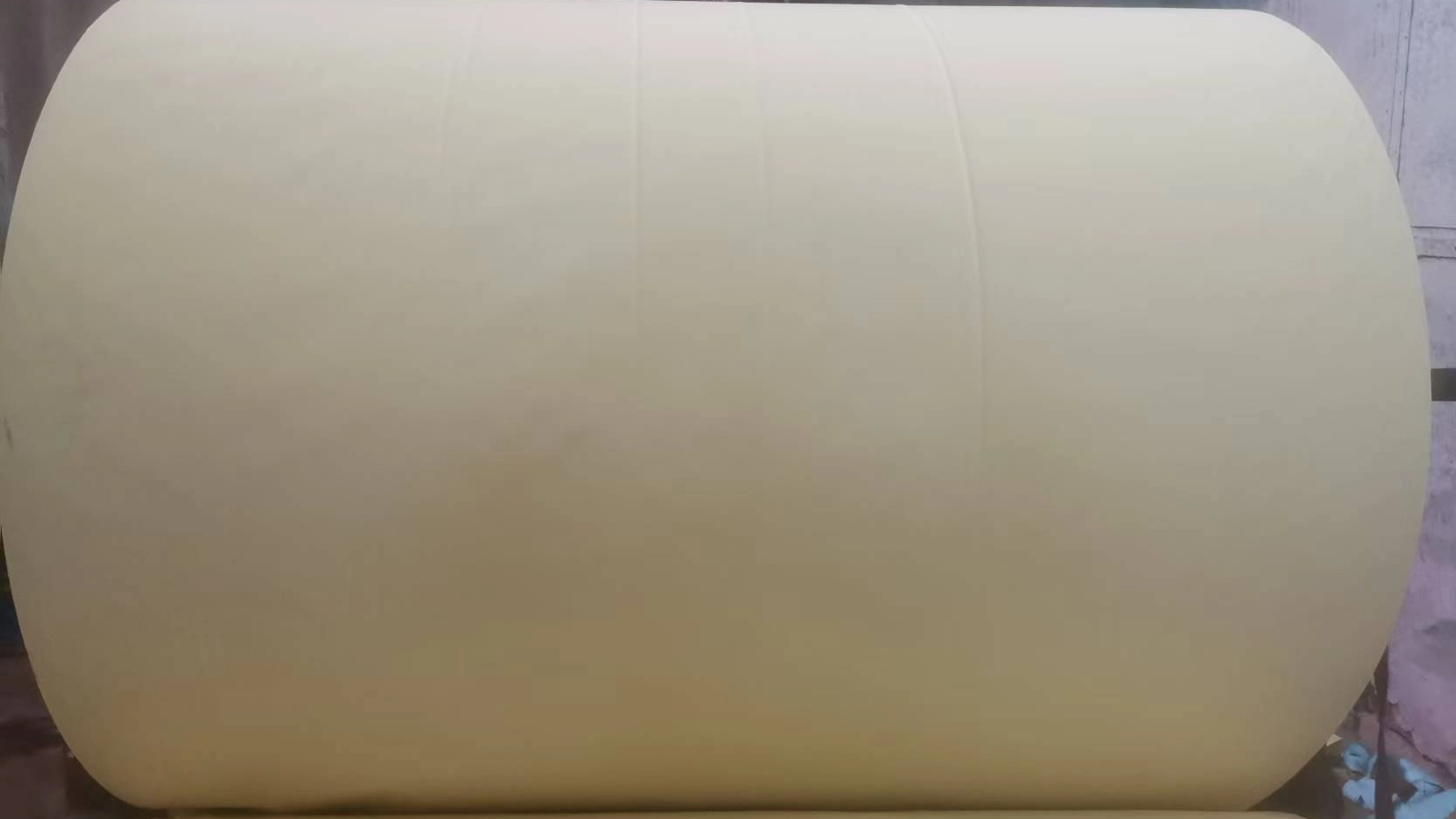
Bible paper is a highly specialized lightweight printing paper widely used for Bibles, dictionaries, classical literature, and other high–page-count books. Despite its extremely low basis weight, it must still deliver good opacity, reliable printability, and long-term durability for frequent reading. For this reason, Bible paper is not simply “thin paper,” but the result of a carefully engineered and industry-proven material system. If you would like to understand how it achieves this balance, keep reading.
At its core, Bible paper is still a wood-fiber-based paper. Its primary raw material is bleached chemical wood pulp, rather than mechanical pulp or recycled pulp. This choice is determined by the functional and archival requirements of Bible paper.
During chemical pulping, lignin is largely removed, leaving fibers that are relatively intact, flexible, and stable. These fibers offer moderate length and high purity, allowing them to form a strong fiber network even at very low basis weights. This is the fundamental reason Bible paper can remain thin without becoming brittle. By contrast, mechanical pulp has damaged fibers and poor aging resistance, making it unsuitable for religious and reference books intended for long-term preservation.
In practice, Bible paper is typically produced using a carefully balanced blend of softwood and hardwood pulps. Softwood pulp contributes tensile strength and toughness, while hardwood pulp improves sheet uniformity and surface smoothness. Together, they help achieve an optimal balance between lightweight construction and durability.
Another defining characteristic of Bible paper is its ability to resist show-through despite its thin structure. This property is not achieved by fibers alone but relies heavily on the filler system.
Common fillers include titanium dioxide (TiO₂) or ultrafine calcium carbonate (CaCO₃). In low–basis-weight papers, fillers play a critical role not in increasing stiffness, but in improving opacity and visual whiteness by refracting and scattering light. This reduces the visual interference between text printed on the front and back of the page.
However, filler content in Bible paper is carefully controlled. Excessive filler addition can weaken fiber bonding, increasing the risk of dusting, cracking, or breakage during binding and repeated page turning. As a result, high-quality Bible paper focuses on filler efficiency rather than high filler loading.
Bible paper is designed primarily for high-precision text printing, so its sizing strategy differs from that of packaging paper or writing paper. Internal sizing or surface sizing is applied mainly to control ink penetration, ensuring sharp text edges and clear characters while minimizing ink strike-through on thin sheets.
Modified starches and synthetic sizing agents are commonly used at relatively low addition levels, yet they have a significant impact on print stability. Proper sizing allows ink to remain on the paper surface instead of rapidly spreading through capillary fiber structures. This controlled ink behavior is a key technical condition that enables dense typesetting on Bible paper.
In terms of specifications, Bible paper typically ranges from 25 g/m² to 40 g/m², far lighter than standard book paper. However, its performance is not determined by basis weight alone. Instead, it results from the combined effects of fiber selection, filler distribution, and sheet structure.
During papermaking, special attention is given to fiber dispersion and formation uniformity to avoid localized weak points. This structural optimization allows the paper to maintain overall strength during repeated reading, folding, and binding processes, without sacrificing durability simply because the paper is thin.
In summary, Bible paper is not merely a thin sheet of paper, but a professional printing material built around bleached chemical wood pulp, refined filler control, and precise sizing design. Its material system is engineered to maximize fiber performance and structural stability under extremely low basis weights. This is precisely why Bible paper continues to be trusted for religious texts and classical literature that demand both compactness and long-term usability. Contact Double Tree Paper to request samples or pricing information.
