
- All
- Product Name
- Product Keyword
- Product Model
- Product Summary
- Product Description
- Multi Field Search

Views: 2 Author: Site Editor Publish Time: 2026-02-13 Origin: Site


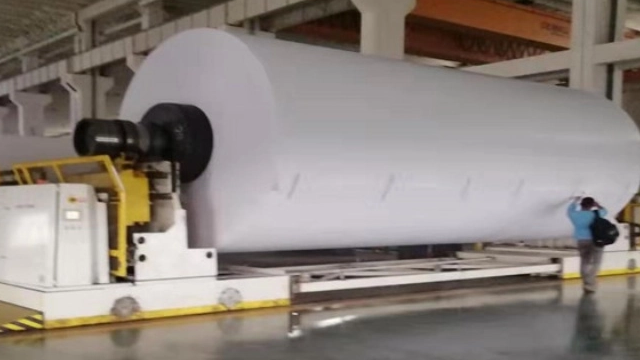
In a release liner system, performance is not determined by silicone coating alone. The real factors that define the physical properties, processing stability, and application suitability of release paper lie in the base paper used. The base paper directly affects strength, thickness, stiffness, surface smoothness, air permeability, moisture resistance, and heat resistance. For this reason, classifying release paper by base paper type is the most fundamental—and most practical—approach in the industry. If you are interested, read on to learn more.
Release Paper Types
Glassine Release Paper
Glassine release paper is widely regarded as the premium option among paper-based release liners. Its base paper undergoes an intensive supercalendering process that creates an extremely dense fiber structure, resulting in a very smooth surface with a semi-transparent or nearly transparent appearance. This structure provides excellent strength and stiffness while also improving moisture resistance and cleanliness. During silicone coating, the dense and uniform surface allows silicone to bond evenly, ensuring stable release force. In converting processes, glassine release paper performs exceptionally well in die-cutting, offering smooth waste removal and clean edges.
As a result, it is widely used in pressure-sensitive labels, especially in applications that demand high dimensional accuracy, appearance quality, and cleanliness, such as electronic labels, medical labels, and medical dressings. Although its cost is relatively high, glassine release paper remains irreplaceable in high-value applications.
CCK release paper uses kraft paper as the base and applies a clay coating to the surface, creating a smoother and whiter appearance. This structure retains the inherent strength and stiffness of kraft paper while significantly improving printability, making it suitable for applications where visual presentation matters. Compared with glassine paper, CCK release paper is more cost-competitive and offers good dimensional stability, making it suitable for large-scale industrial production. However, due to the coated surface, silicone adhesion and die-cutting stability are generally less consistent than glassine, especially in complex die-cutting processes where coating cracking may occur.
Therefore, CCK release paper is more commonly used for labels, industrial tapes, composite materials, and envelope sealing stickers that require good stiffness and print quality but have moderate die-cutting precision requirements.
SCK release paper is often considered a balanced option between CCK and glassine paper. It also uses kraft paper as the base, but its surface smoothness and density are enhanced through supercalendering rather than coating. Compared with standard kraft paper and CCK paper, SCK release paper offers more uniform silicone coating performance and better die-cutting stability, while still maintaining good strength and stiffness. Its transparency is lower than glassine, but this difference does not limit most label and tape applications.
Thanks to its strong balance between performance and cost, SCK release paper is often viewed as an economical alternative to glassine, suitable for mid-range applications that require reliable die-cutting performance while remaining cost-sensitive.
Kraft release paper is the simplest type of release liner in terms of structure. Its base paper is typically uncoated or only lightly surface-treated, retaining the natural fiber texture and brown appearance of kraft paper. Its main advantages are low cost, high strength, and good stiffness, making it suitable for price-sensitive applications. However, due to its relatively rough surface, silicone coating uniformity and release force consistency are more difficult to control. Die-cutting performance, including waste removal and edge cleanliness, is also limited.
As a result, kraft release paper is usually used in applications where appearance and die-cutting precision are not critical, such as certain industrial tapes, construction tapes, protective films, and low-end label products. In these cases, functionality typically takes priority over appearance and processing accuracy.
PE coated release paper is produced by laminating a layer of polyethylene (PE) or polypropylene (PP) film onto the paper base through extrusion coating. This significantly improves moisture resistance, water resistance, and oil resistance.
This composite structure allows the release paper to maintain stable physical performance and release properties even in humid or high-barrier environments. Compared with uncoated paper-based release liners, coated release paper offers a smoother surface and higher strength, but also comes with higher production costs and increased recycling difficulty.
For this reason, it is mainly used in applications with strict barrier requirements, such as food packaging sealing labels, hygiene product back liners, medical dressings, and chemical product labels. In these applications, material safety and stability are often more important than cost.
Strictly speaking, PET release liner is no longer considered a traditional “release paper,” but rather a high-performance release material based on polyester film. PET offers exceptional strength, dimensional stability, and heat resistance, maintaining excellent mechanical performance and surface flatness even at very thin gauges. This makes PET release liners almost the only viable option for applications requiring high-precision die-cutting, high-temperature resistance, or extreme transparency. In the electronics industry, PET release liners are widely used for internal fixing tapes in smartphones and tablets, OCA optical adhesive tapes, and high-performance composite materials due to their stability and consistency.
Although PET release liners have the highest cost among all release materials, their performance advantages far outweigh price considerations in high-end and precision-driven applications.
From glassine paper to PET release liners, different base materials form a clear and complete performance hierarchy within the release liner system. The choice of base material essentially defines the performance ceiling and application boundaries of a release paper. Understanding the relationship between structure, performance, and application helps not only with material selection but also with achieving the optimal balance between cost, processing efficiency, and finished product quality. Double Tree Paper provides one-stop paper solutions—contact us today for pricing and samples.
