
- All
- Product Name
- Product Keyword
- Product Model
- Product Summary
- Product Description
- Multi Field Search

Views: 58 Author: Site Editor Publish Time: 2026-07-29 Origin: Site


Introduction: Understanding Paper Hygiene Products
What Is Tissue Paper?
What Is Toilet Paper?
Key Differences: Tissue vs. Toilet Paper
Manufacturing Process & Raw Materials
Applications in Daily Life
Why Choose Double Tree Paper Group?
FAQ
In the global paper market, "tissue" is a broad category that encompasses many products we use daily. However, consumers and businesses often confuse tissue paper (like facial tissues or paper towels) with toilet paper.
While they may look similar, their engineering is vastly different. One is designed to stay strong when wet, while the other is designed to break apart. At Double Tree Paper Group, we specialize in manufacturing both, ensuring the right product meets the right need while adhering to strict environmental standards.
Tissue paper refers to a class of lightweight, creped papers designed for high absorbency and wet strength. Common examples include facial tissues, paper towels, and napkins.
Key Characteristics:
Wet Strength: Treated with resins to prevent tearing when wet.
Absorbency: High capacity to hold liquid.
Softness: Engineered for gentle contact with skin (especially facial tissues).
Durability: Can withstand rubbing and wiping without disintegrating.
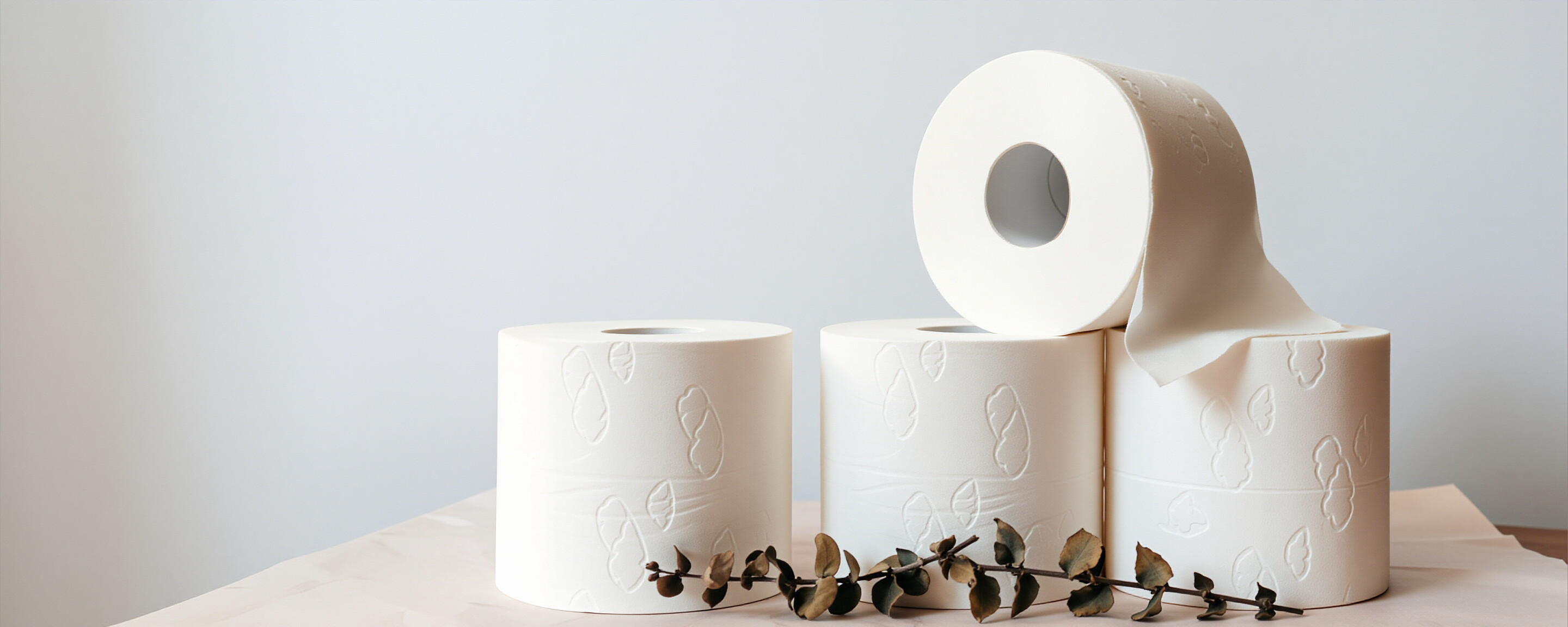
Toilet paper (or bathroom tissue) is a specific type of tissue paper designed primarily for personal hygiene after using the restroom. Its most critical feature is its ability to disintegrate rapidly in water to prevent plumbing blockages.
Key Characteristics:
Dispersibility: Breaks down quickly in water (low wet strength).
Septic Safe: Designed not to clog pipes or septic systems.
Softness: Prioritizes comfort over durability.
Layers: Available in 1-ply, 2-ply, or 3-ply for varying thickness.
The main difference lies in wet strength.
Feature | Tissue Paper (Facial/Towel) | Toilet Paper |
|---|---|---|
Wet Strength | High (stays intact when wet) | Low (dissolves in water) |
Primary Use | Wiping face, hands, spills | Personal hygiene |
Flushability | Do Not Flush (causes clogs) | Flushable |
Texture | Smooth or embossed for strength | Creped for softness and bulk |
Important Note: Never flush facial tissues or paper towels. Because they do not break down like toilet paper, they are a leading cause of sewer blockages.
Both products generally start with wood pulp (virgin or recycled), but the chemical treatment differs.
Pulping: Wood chips are cooked to separate fibers.
Paper Making: The pulp is sprayed onto a mesh screen to form a sheet.
Creping: A doctor blade scrapes the paper off a drying cylinder, creating the characteristic crinkles that add bulk and softness.
Chemical Treatment:
For Tissue: Wet strength resins (like polyamide-epichlorohydrin) are added.
For Toilet Paper: Temporary binders are used, or the fiber mix is adjusted to ensure it falls apart in water.
Double Tree Paper Group supplies base paper and finished products for a wide range of hygiene needs:
Facial Tissues: Boxed or pocket tissues for cold and flu season.
Paper Towels: Kitchen rolls and industrial wipers for cleaning spills.
Napkins: Dining napkins for restaurants and home use.
Bathroom Tissue: Standard toilet rolls for home and commercial restrooms.
Hand Towels: Folded towels for public restrooms.
As a leading manufacturer, we understand that quality and sustainability go hand in hand.
Our Advantages:
Diverse Product Range: From high-wet-strength paper towels to ultra-soft toilet tissue, we produce it all.
Sustainable Sourcing: We utilize FSC-certified virgin pulp and high-quality recycled fibers to minimize environmental impact.
Customization: We offer various embossing patterns, ply counts, and packaging solutions to fit your brand.
Global Export: With a monthly export volume of 200-300 containers, we deliver reliable hygiene solutions to over 200 countries.
Q1: Can I use facial tissue as toilet paper in an emergency?
A: While you can use it, you should not flush it. You must dispose of facial tissue in a waste bin, as it will not break down in your plumbing system and will likely cause a blockage.
Q2: Is recycled toilet paper as soft as virgin pulp?
A: Technology has improved significantly. While virgin pulp is generally softer, high-quality recycled toilet paper can be very comfortable and is a much more eco-friendly choice.
Q3: What is the difference between 1-ply and 2-ply?
A: 1-ply is a single layer of paper, while 2-ply consists of two layers bonded together. 2-ply is generally stronger, more absorbent, and softer.
Q4: Does Double Tree Paper Group offer private labeling?
A: Yes, we provide OEM and ODM services, helping brands launch their own lines of tissue and toilet paper products with custom packaging and specifications.
