
- All
- Product Name
- Product Keyword
- Product Model
- Product Summary
- Product Description
- Multi Field Search

Views: 12 Author: Site Editor Publish Time: 2026-05-09 Origin: Site


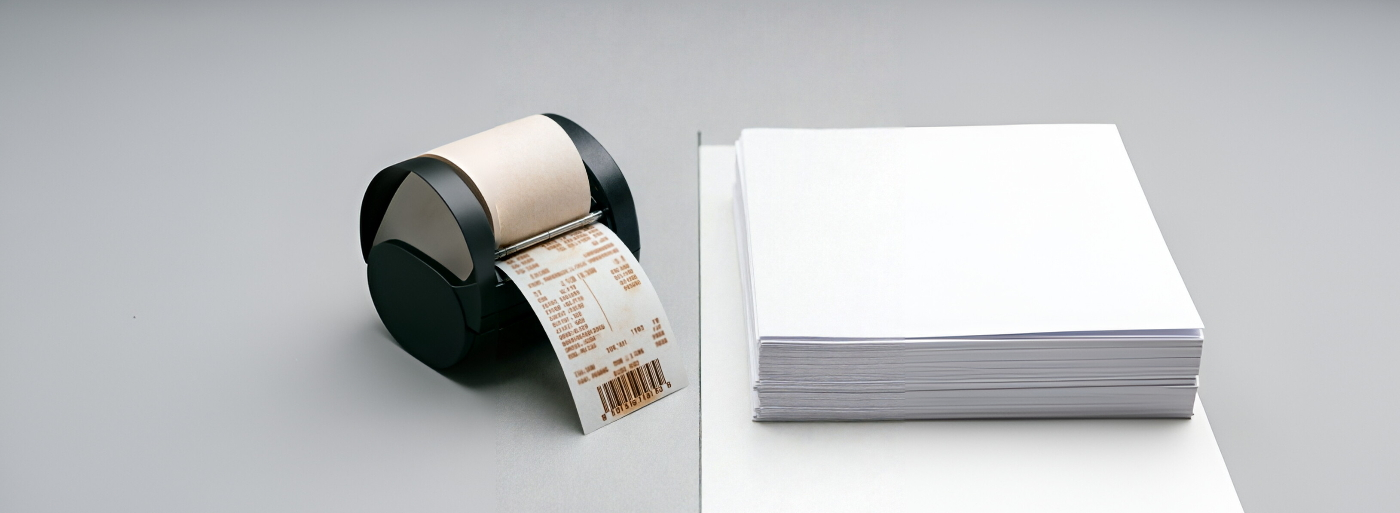
Thermal Paper vs. Regular Paper: Understanding the Key Differences
In the world of paper products, two types stand out for their ubiquity: Thermal Paper and Regular Paper (often referred to as Bond Paper or Woodfree Paper). While they may look similar at a glance, the technology behind them is vastly different.
At Double Tree Paper Group, we often get asked: "Can I use regular paper in my POS machine?" or "Why does my receipt fade over time?" The answer lies in understanding how these two papers are made.
Here is a comprehensive breakdown of the differences between thermal paper and regular paper.
The most significant distinction lies in the surface treatment.
Feature | Thermal Paper | Regular Paper |
|---|---|---|
Printing Mechanism | Heat-activated. The printer applies heat to the coated surface. | Ink/Toner-dependent. Requires liquid ink (inkjet) or powdered toner (laser). |
Image Creation | Chemical reaction (dye + developer). | Physical deposition of ink/toner onto the fiber. |
Best For | Speed and efficiency (e.g., receipts, shipping labels). | Long-term archiving and high-quality graphics (e.g., books, letters). |
Choosing between thermal and regular paper depends entirely on your end-use.
Whether you need thermal paper for your retail chain or regular paper for your office supply business, Double Tree Paper Group has you covered.
With over 30 years of experience and a monthly export capacity of 200-300 containers, we are one of China's leading paper suppliers. We hold FSC and ISO certifications, ensuring that our products meet global environmental and quality standards.
Contact us today for free samples and competitive pricing!
